There are a number of settings where patients will look to compare professional forms of physical therapy or physical treatment with at-home products, and a good example here is the comparison of clinical-grade percussion therapy services to at-home massage guns. The latter is a category that’s become immensely popular in recent years among athletes and others who exercise often – but can it truly compare to the level of quality of clinical percussion therapy?
At ImPackt Physical Therapy, we’re proud to offer the very best clinical-grade percussion therapy services available around South Jordan, Riverton and nearby parts of Utah. Here’s a rundown of what percussion therapy is, the pros and cons of both clinical percussion therapy and at-home percussive massage guns, and some tips on how to choose between these options for your percussion therapy needs.
What is Percussion Therapy?
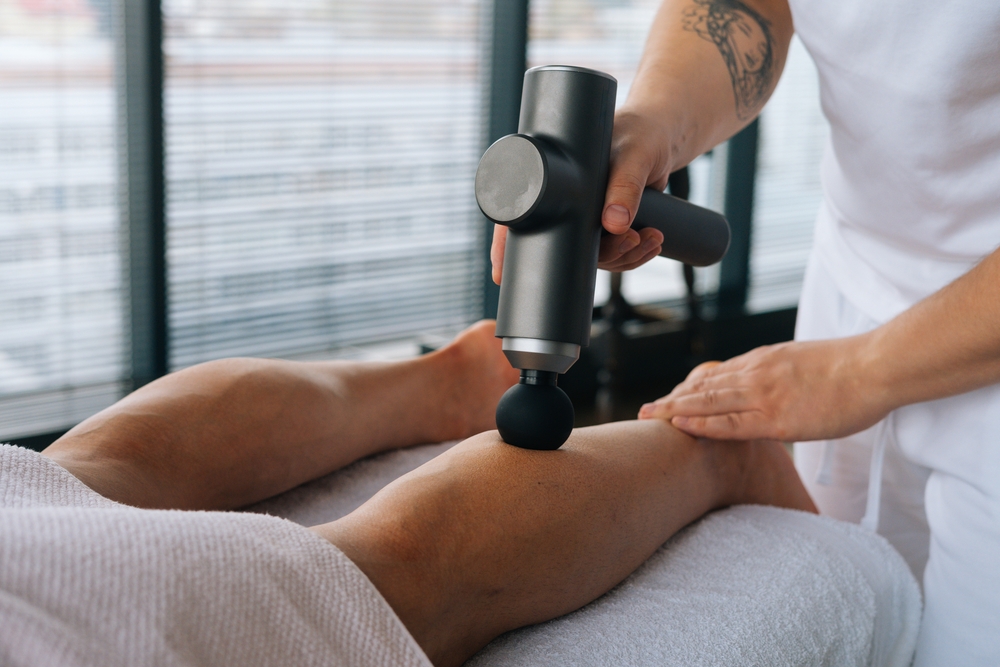
For those just learning about it, percussion therapy is a cutting-edge form of massage that has been gaining popularity in recent years. The treatment involves using rapid pulses of pressure to stimulate the soft tissues of the body, providing relief for sore muscles and joints. This type of therapy is similar to traditional massage techniques like deep tissue or Swedish massage, but uses a special device known as a percussive massage gun to deliver targeted pressure and vibration to specific areas of the body.
By targeting key trigger points, percussion therapy can help reduce tension and tightness in muscles, increase blood flow, and improve flexibility. It has also been shown to be effective in reducing muscle soreness and promoting faster recovery after intense workouts.
In addition to its physical benefits, percussion therapy has also been linked to improvements in mental health. The deep pressure and vibrations from the massage gun have a calming effect on the nervous system, helping to release tension and promote relaxation. This can be especially beneficial for individuals who suffer from chronic stress or anxiety.
Pros and Cons of Clinical Percussion Therapy
Within clinics like ours at ImPackt Physical Therapy, professionals utilize clinical percussion therapy to address various musculoskeletal complaints. There are several pros and cons associated with this type of treatment, which we will outline here.
Pros:
- Expertise: Because our team consists of licensed physical therapists, patients can rest assured that they are receiving the highest level of professional care. Our therapists have extensive knowledge and experience in utilizing clinical percussion therapy to address a wide range of conditions.
- Pressure control: One key expertise area that our therapists apply to percussion therapy is the ability to control pressure. This means that they can adjust the level of force used during treatment to cater to each patient’s needs and comfort levels.
- Depth of use: Another important aspect of percussion therapy is the depth of use, which refers to how deeply the treatment penetrates into the muscles. Our therapists are skilled in using different types of percussion tools and techniques to effectively target specific areas for maximum relief.
- Frequency and duration: In addition to pressure control and depth of use, our therapists also consider the frequency and duration of percussion therapy This can vary depending on the condition being treated and the individual needs of each patient.
Cons:
- Cost: Generally, the most notable potential downside of clinical percussion therapy is the cost, which will typically exceed that of an at-home percussive massage gun. However, for people with significant muscle or joint pain, the cost may be well worth it.
- Availability: This type of therapy is not widely available at all physical therapy clinics or chiropractic offices. It may require some research to find a therapist who specializes in percussion therapy in your area.
Pros and Cons of At-Home Massage Guns
On the flip side, at-home percussive massage guns also have their own sets of benefits and drawbacks.
Pros:
- More affordable: In most cases, investing in an at-home massage gun may be more cost-effective than frequent visits to a therapist.
- Convenience: With an at-home massage gun, you have the flexibility to use it whenever and wherever you want. You can incorporate it into your daily routine without having to worry about scheduling appointments or traveling.
- Personalization: Unlike visiting a therapist where the massage techniques may be generalized, using an at-home massage gun allows you to personalize your therapy sessions according to your specific needs and preferences.
Cons:
- Lack of professional guidance: Without proper knowledge and training, there is a risk of causing harm or injury by using the percussive massage gun It is important to educate yourself on how to properly use the device or seek professional guidance before incorporating it into your self-care routine.
- Battery life: Depending on the model and brand, at-home massage guns may have limited battery life and require frequent charging. This could potentially disrupt your therapy session if the device dies in the middle of use.
- Noise: Most at-home massage guns produce loud noise due to their powerful motors, which may not be ideal for some users who prefer a quieter and more relaxing experience.
At ImPackt Physical Therapy, we’re here to help with all your clinical percussion therapy needs around South Jordan, Riverton and nearby areas. Contact us today for these or any of our other physical therapy solutions!